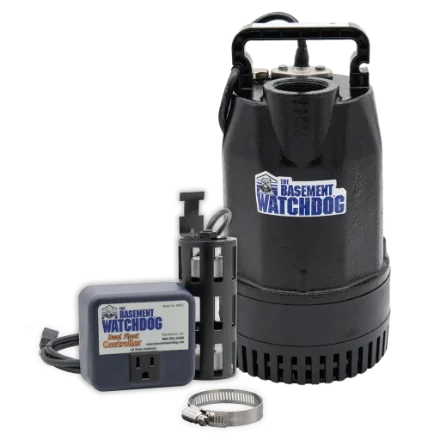
The line between a dry basement and an insurance claim. A sump pump moves groundwater out of your basement before it floods the floor. A backup pump handles the storm that knocks out power right when you need it most.
A sump pump is required equipment if you have a basement or crawl space in central Indiana, where heavy spring rain and clay soil push groundwater into homes every year. A battery or water-powered backup pump makes sense for anyone with finished space below grade, valuable storage downstairs, or a history of basement water issues. Pumps also need replacing on a schedule. Most last seven to ten years.
Cheap big-box sump pumps fail at the worst possible time. Quality cast iron primary pumps run cooler, last longer, and handle higher volume than plastic units. Glentronics and similar trade-grade brands include controllers that monitor pump cycles, water level, and battery health, then alert you before a failure happens instead of after.
A battery backup runs on its own power for hours during an outage. Water-powered backups run as long as you have municipal water pressure, with no battery to maintain. Many homes benefit from a primary, a backup, and an alarm system together so a single point of failure doesn't take out the whole defense.
Quality manufacturers back their equipment with strong warranties so your investment is protected long after install.
A sump system is only as good as the install. Correct pit sizing, proper check valves, clean discharge routing, and a backup that actually engages when the primary fails are what stand between your basement and a flood. Godby's certified plumbers handle every step and inspect the system annually through Club Godby. That's what turns a good product into a great long-term investment.