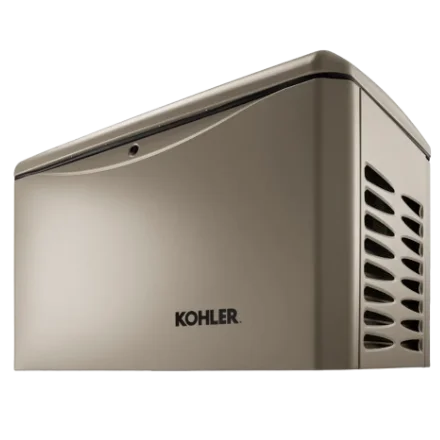
Power that turns on when the grid turns off. A whole-home standby generator runs on natural gas or propane, sits permanently outside your home, and starts automatically within seconds of an outage. Lights stay on. Furnace keeps running. Sump pump keeps the basement dry.
A standby generator makes sense if outages in your area regularly last more than a few hours, if you have well water that needs power to pump, or if anyone in the home depends on medical equipment, refrigerated medication, or climate-controlled spaces. It's also a strong call for finished basements where a sump pump failure means real damage and for home offices where downtime costs money.
A whole-home unit beats a portable generator on every meaningful axis. No fuel runs to the gas station during a storm. No extension cords through the window. No noise of a portable engine running on the patio. Modern standby units run quieter than a central AC and only fire up when they're actually needed.
Standby generators connect to the home's existing natural gas or propane line so the fuel supply effectively never runs out. An automatic transfer switch detects the outage, isolates the home from the grid, and starts the generator within ten seconds. When utility power returns, the system switches back automatically and shuts the generator down.
Sizing options range from units that cover essential circuits like the furnace, refrigerator, and sump pump up to whole-home models that run every appliance simultaneously, including central air.
Quality manufacturers back the equipment with strong warranties so your investment is protected long after install.
A generator is only as good as the install. Correct sizing, code-compliant gas and electrical work, proper transfer switch wiring, and ongoing maintenance are what keep the unit reliable for the next decade plus. Godby's certified electricians handle every step and provide annual service. That's what turns a good product into a great long-term investment.